Solar garden ornaments get returned for one reason more than any other: they stop glowing after a few weeks. Almost always the panel is in shade for part of the day, or the panel glass has a film of dust on it. Both are fixable in about five minutes.
Give the panel six hours, and give it the right six
The panel needs direct sun, not bright shade. Morning sun in most US latitudes is weaker than afternoon sun, so an east-facing spot that looks bright can still undercharge a small cell. If the statue is under a deciduous tree, expect it to dim noticeably in leaf season.
Placement by piece
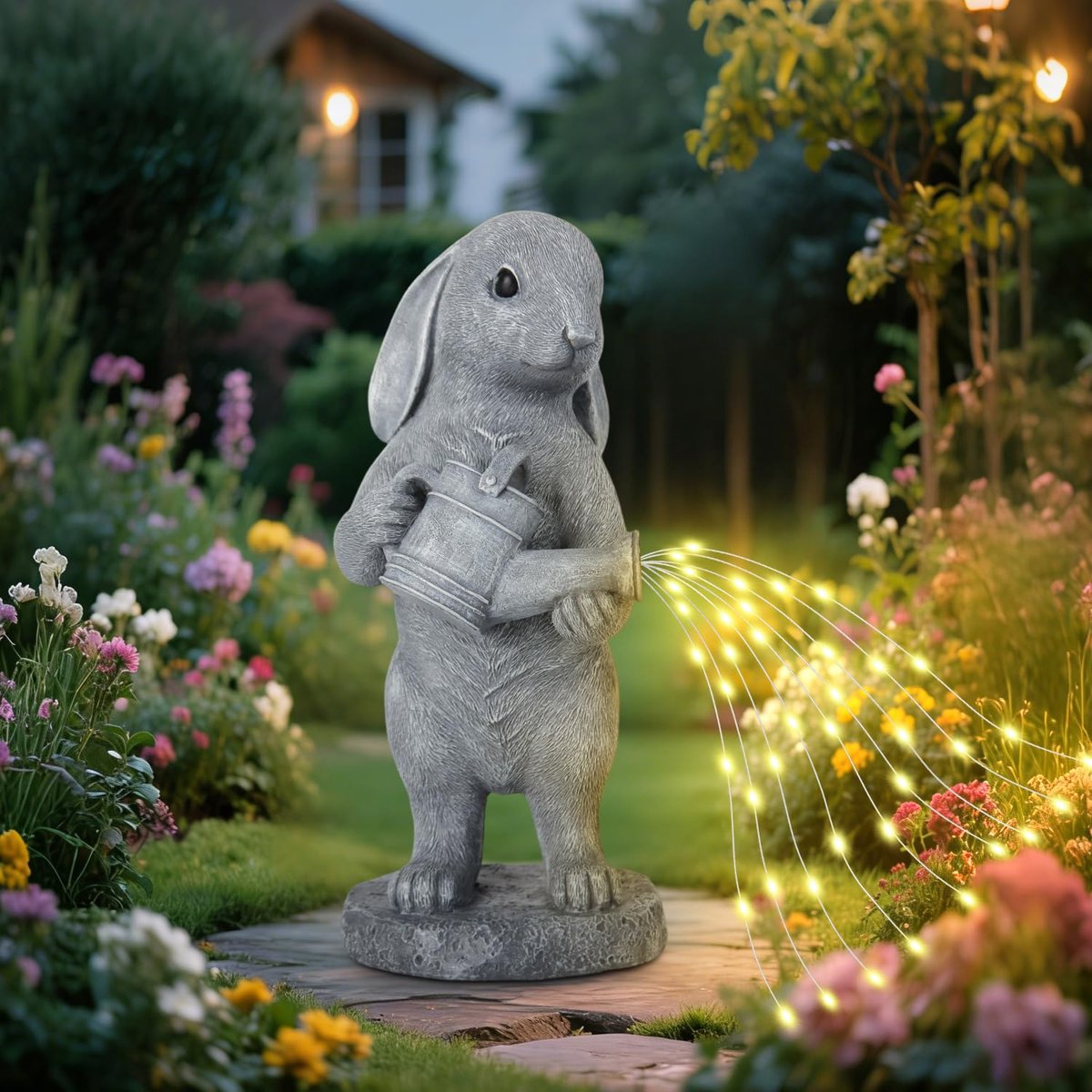
- Rabbit with watering can — the panel sits on top of the can, facing up. Best on an open lawn bed, not under a shrub.
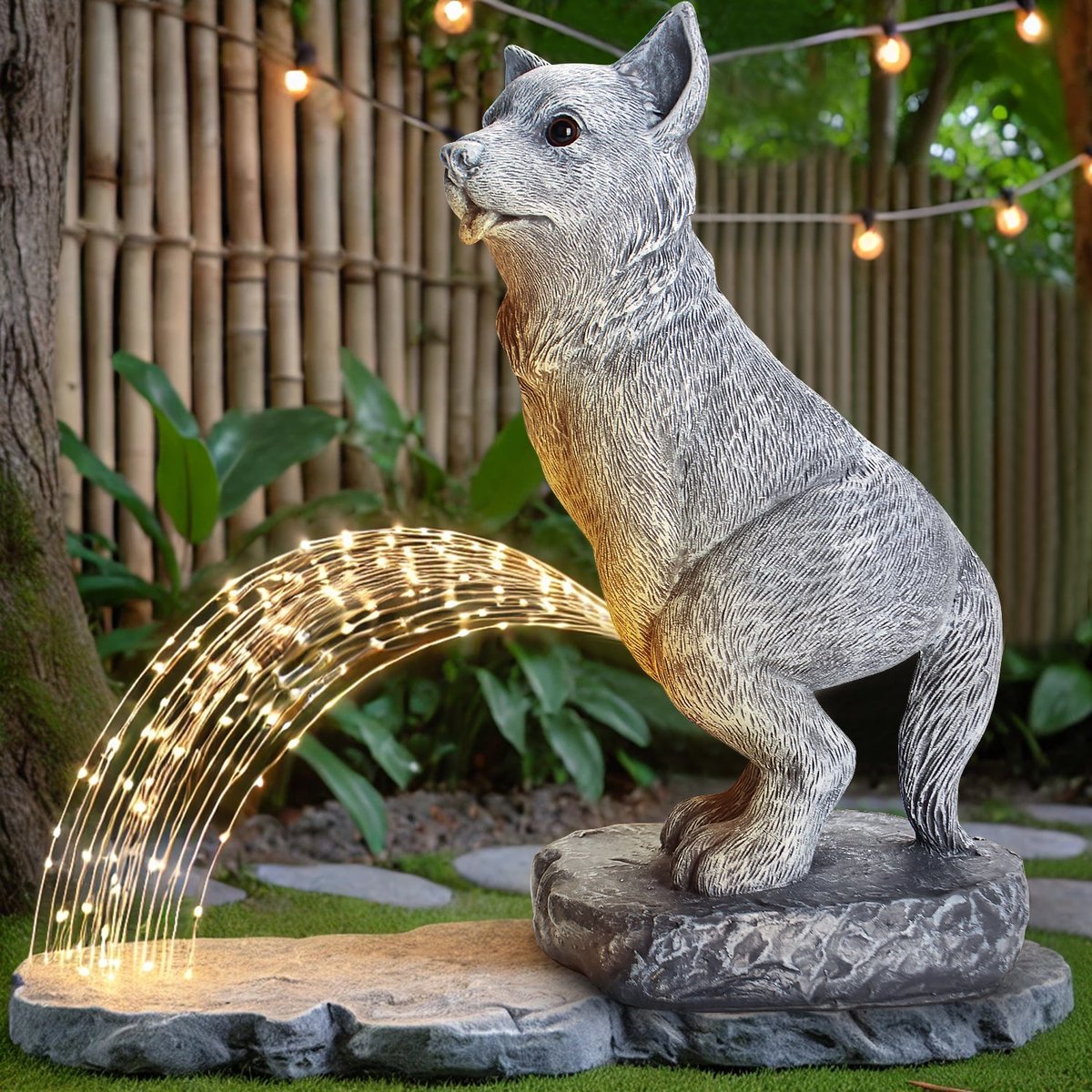
- Funny dog garden statue — the LED strip runs along the body, so it reads best against something dark. Against a light wall the glow washes out.
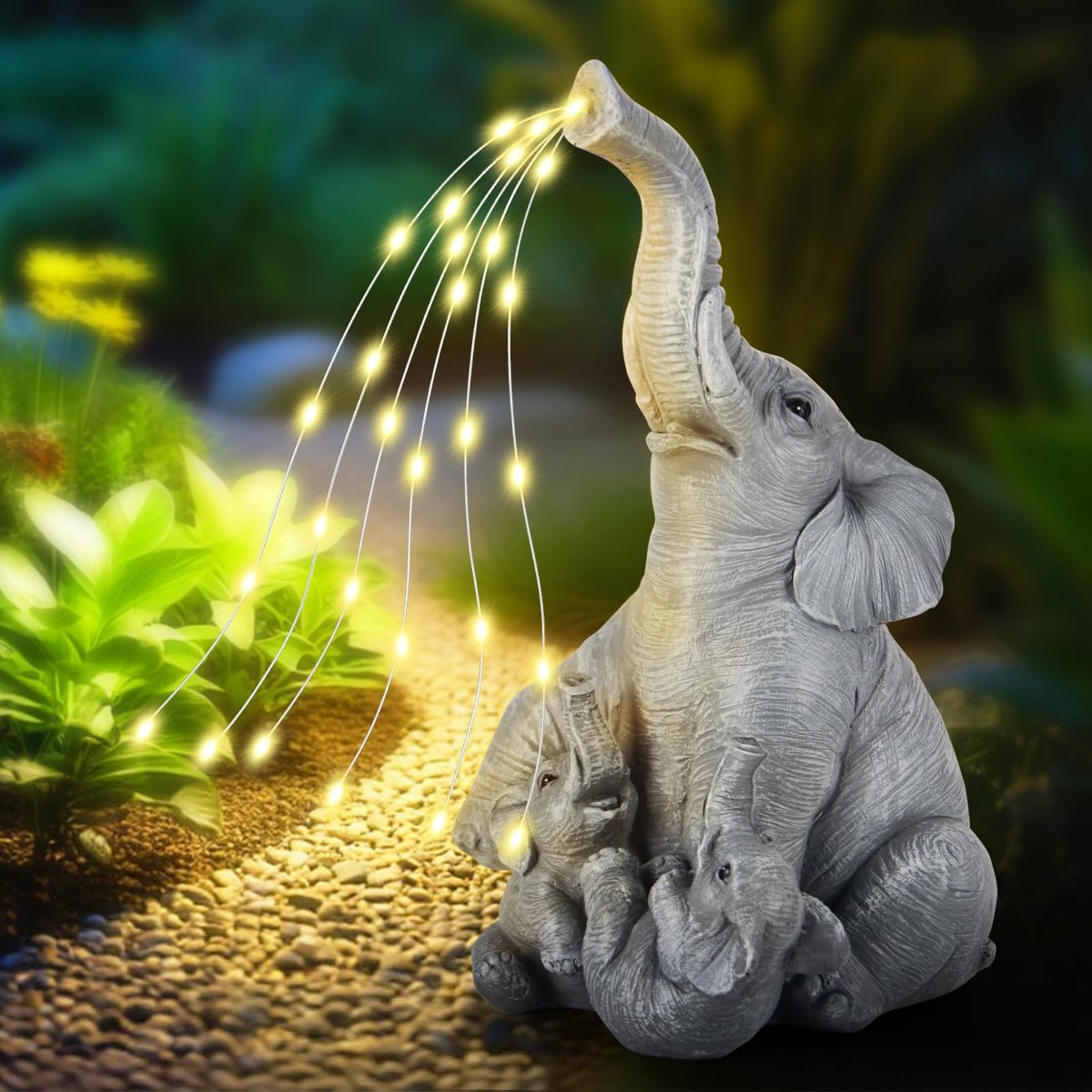
- Solar family elephant statue — bigger footprint; give it a bed corner where it will not be walked into after dark.
- Solar cardinal memorial stone — flat, heart-shaped, meant to sit low. Panels on flat stones need a clear sightline to the south.
- Frog and mushroom figurine — small enough for a porch step or a pot; easiest of the group to reposition when the sun shifts.
Winter, honestly
Two things shorten the life of these pieces: freeze-thaw cycles with water sitting in the base, and short winter days that leave the cell chronically undercharged. A solar lamp in a northern winter will often run two to three hours instead of six. That is normal, not a fault.
Maintenance, twice a year
- Wipe the panel with a damp cloth — dust cuts output more than most people expect.
- Check that the battery compartment has not pooled water after heavy rain.
- Bring small pieces indoors if you get hard freezes.
Quick answers
Why does it glow dimly after a cloudy week?
Undercharged cell. Give it two full sunny days before assuming the battery has failed.
Can I leave it out in winter?
The resin handles it. The battery does not always. If you get sustained freezes, store it indoors.